QR Codes for Retail & eCommerce
Every product shelf, a gateway to more sales.
Retail is a physical business with an increasingly digital customer. Someone standing in your aisle right now is probably holding a phone that already has three browser tabs open comparing your product to a competitor's: reviews on one, a price check on another, a video review on a third. A QR code on the shelf label, the packaging, or the receipt is the one moment you get to put your own information in front of them before they go looking for it somewhere else.
The retailers who get the most out of this aren't necessarily the biggest ones; they're the ones who treat a QR code as a second, better version of the shelf label rather than a marketing gimmick bolted on top of it. A shelf tag has room for a name, a price, and maybe a two-word description. The QR code on that same tag can carry a demo video, a comparison chart, verified reviews, sizing guidance, or a direct reorder link, and none of it costs anything extra to print; it's the same square of ink whether it links to nothing useful or to your entire product story.
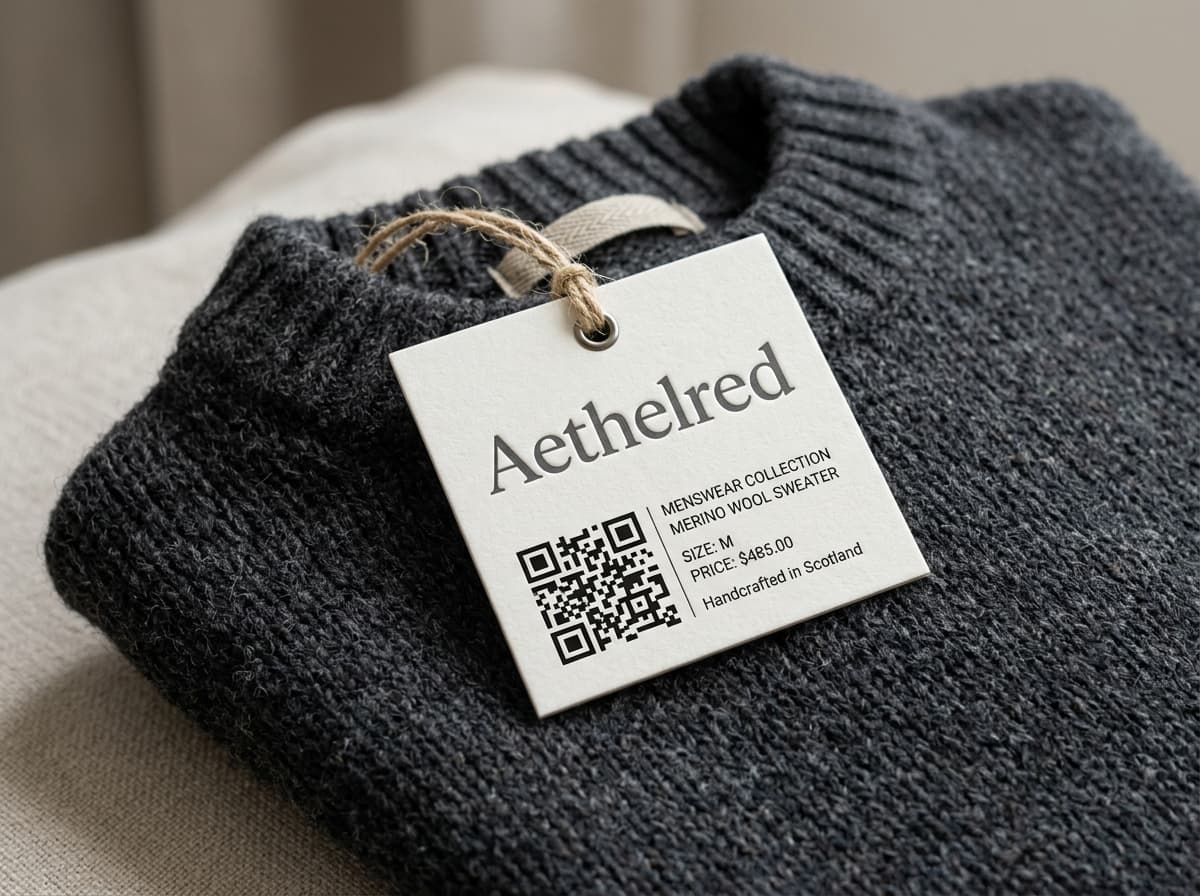
QR code per product: swap the destination for seasonal promos, keep the printed label
1
1
QR code per product: swap the destination for seasonal promos, keep the printed label
Live
per-product scan analytics, viewable in your dashboard as soon as scans start
Geo
targeting on the Business plan, for showing region-specific pages from one code
0
label reprints needed the next time a linked offer or page changes
Direct Comparison
Why dynamic QR codes outperform paper menus
A clear look at operational friction versus instant digital agility.
| Operational Scenario | Traditional Paper / Static QR | ScanOrbit Dynamic Solution |
|---|---|---|
| Price Adjustments | Manual pen strikethroughs or $300+ reprint batch runs whenever ingredient costs change. | Change prices in seconds from your mobile dashboard. Every table QR code updates instantly. |
| Sold-Out Specials | Diners order 86'd items; servers repeatedly apologize, slowing down table turns. | 1-click hide sold-out dishes so diners only see currently available items. |
| Seasonal Menu Shifts | Pay for new laminated cardstock and wait 5 to 10 business days for print delivery. | Upload a new PDF or link to a seasonal catalog with zero physical replacement. |
| Guest WiFi Access | Servers waste time repeating complex passwords across noisy dining rooms. | Diners scan a coaster QR code to auto-connect to the guest WiFi network instantly. |
| Google Review Growth | Passive table tents asking guests to search Google (over 95% of guests forget). | Receipt footer QR code deep-links directly into the Google 5-star review submission modal. |
Tactical Deployments
QR codes in retail environments
These are the highest-converting physical touchpoints for retail & ecommerce. Each is a separate dynamic QR code: fully trackable, updatable, and branded.
Shelf edge label: scan for full specs, a comparison chart, or a short demo video, right where the buying decision actually happens.
A packaging insert lets someone scan to register a warranty, unlock a setup guide, or open a companion app the moment they open the box.
Receipt footer, for scanning to join the loyalty programme or leave a review while the experience is still fresh and before the receipt hits the bin.
Fitting room signage answers questions a shopper wouldn't ask a staff member: a size guide, fabric care notes, styling suggestions.
A window display scanned after hours lets someone shop the exact look on display, capturing the foot traffic that walks past when the doors are closed.
Retail & eCommerce Live Telemetry
Real-time scan logs
Implementation Blueprint
How to deploy QR codes for retail & ecommerce
From initial vector export to live table tents and receipt footers in under 5 minutes.
Start with your highest-consideration products
Don't put QR codes on everything at once. Start with the products where more information would most plausibly change the outcome: electronics, anything with sizing, anything people research before buying.
Create one dynamic URL code per product
Point it at the product page, or build a dedicated landing page in ScanOrbit with reviews, a demo video, and related products, if your main site page is too cluttered for a shelf-side glance.
Export at print resolution and add a reason to scan
Download the SVG so it prints crisp at any label size, and pair it with a short instruction like 'Scan for size guide'; a bare code with no explanation gets ignored far more often than one with a clear reason attached.
Check the numbers monthly and reallocate shelf space
Scan data tells you which products draw real curiosity. Use it alongside sales data; a high-scan, low-sale product might just need better placement, not a discount.
Tailored Formats
Recommended QR formats for retail & ecommerce
Each physical touchpoint demands a specific QR type. These formats deliver the highest scan conversion.
URL QR Code
Link shelf labels to product pages and reorder links
Coupon QR Code
Drive redemptions from packaging and point-of-sale materials
Google Review QR Code
Send a happy customer straight to your Google review box from a receipt or packaging insert
Video QR Code
Play a product demo or how-to video from a shelf tag or hangtag
Image Gallery QR Code
Show every colourway or angle of a product from a tag with room for one photo
UPI Payment QR Code
Accept payment at the till or a market stall with no card machine
Landing Page QR Code
Create a loyalty programme sign-up page for receipt QR codes
Feedback QR Code
Collect private product ratings you can act on, without it becoming a public review
Industry FAQ
Common questions for Retail & eCommerce
Direct answers regarding printing dimensions, scan durability, redirect management, and analytics for retail & ecommerce.
Have a custom rollout question?
Our engineering team is ready to help
Need help scaling across multiple store locations, hotel properties, or commercial packaging lines?
Yes, any URL works. If you change platforms later, just update the destination URL in ScanOrbit without replacing your shelf labels.
Cross-Sector Solutions
Explore more industry blueprints
See how other sectors eliminate reprint costs and track physical engagement.
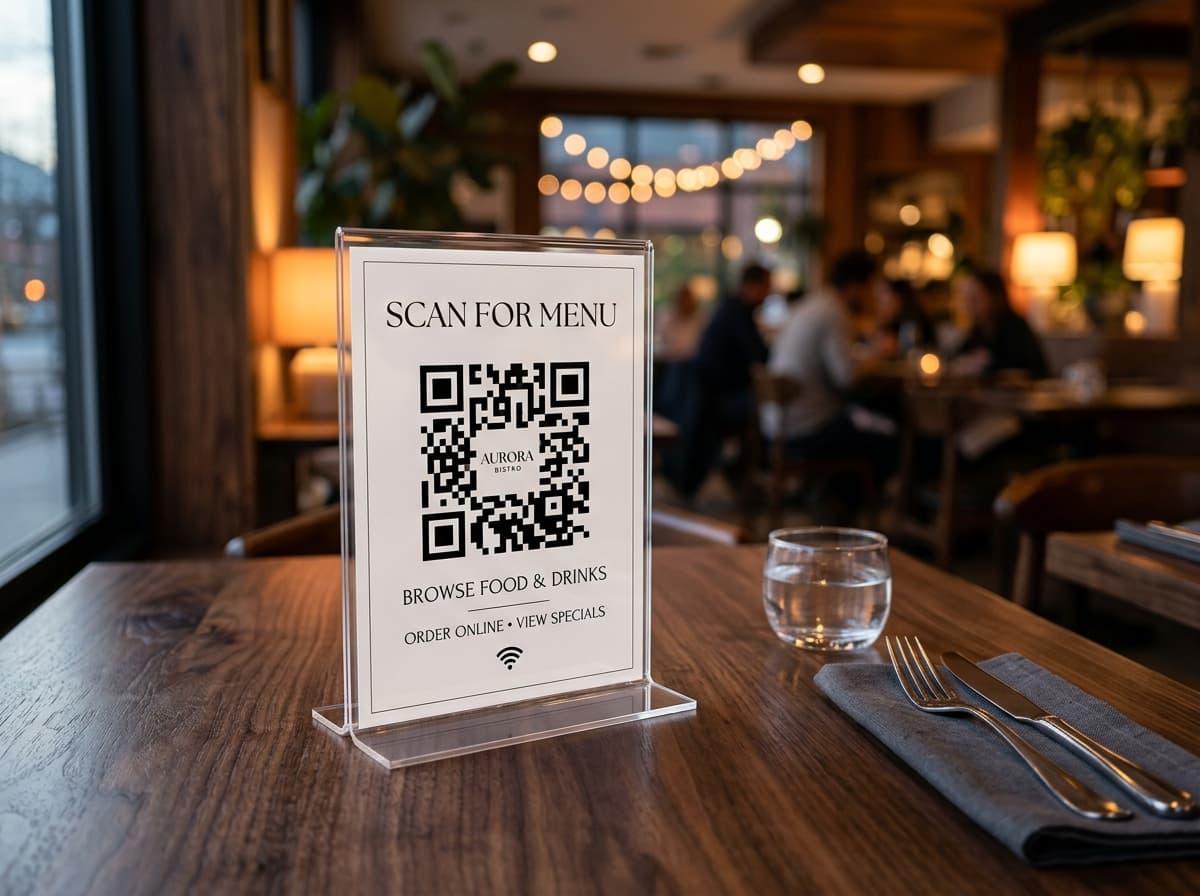
Restaurants & Cafés
Turn paper menus into instant digital experiences.
Contactless menus, WiFi codes, loyalty campaigns, and review links, all with a single scan.

Events & Conferences
Streamline every touchpoint of your event.
Digital programmes, speaker bios, feedback forms, and sponsor activations, all without printing.
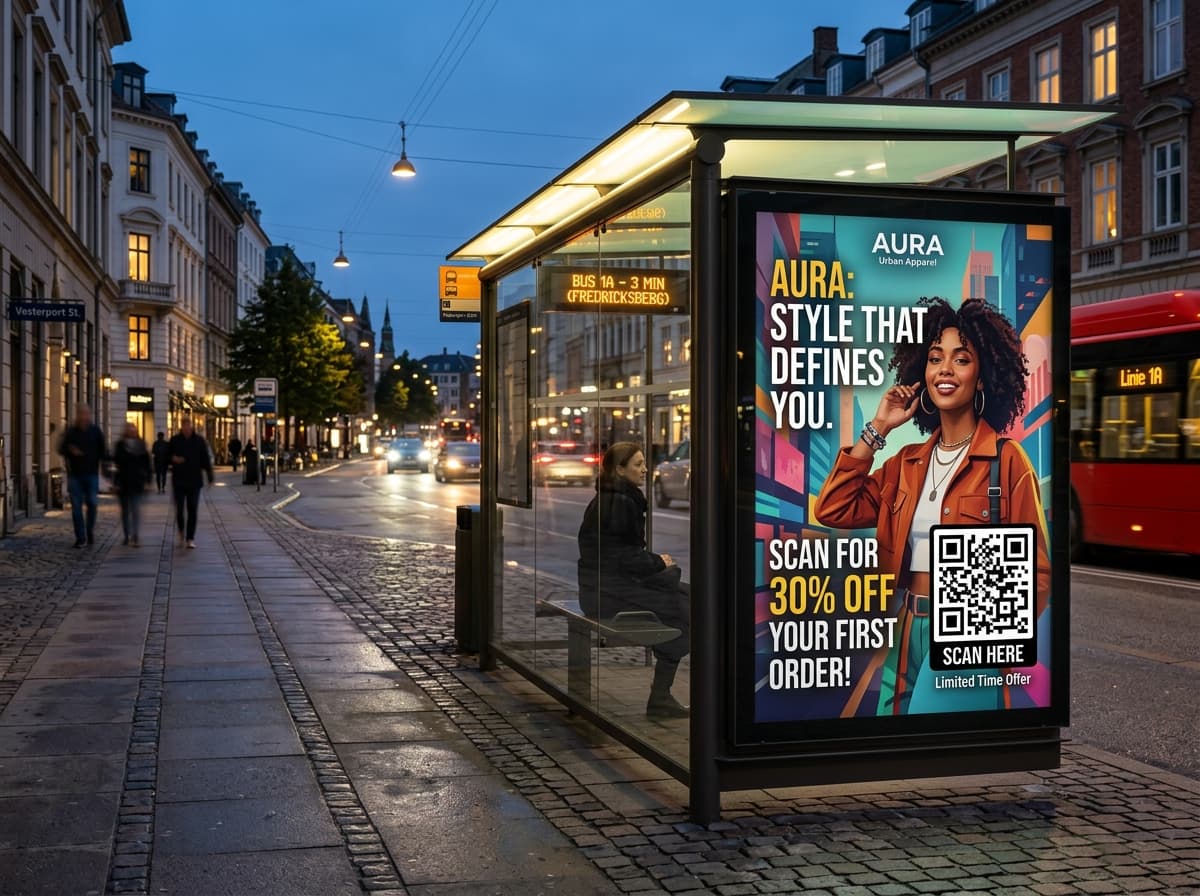
Marketing Campaigns
Measure every offline campaign like an online one.
Add tracking, UTM parameters, A/B testing, and retargeting pixels to every piece of print media.
Related Guides & Knowledge Base
Master print optimization, real-time analytics telemetry, and campaign design best practices.
 Design4 min read
8 QR Code Design Mistakes That Hurt Scan Rates
Avoid contrast errors, margin clipping, and improper error correction before high-volume commercial print runs.
 Analytics6 min read
What Your QR Code Analytics Are Actually Telling You
Decode scan telemetry: turn city geolocations, device breakdowns, and time curves into actionable campaign ROI.
 Guides5 min read
Dynamic vs Static QR Codes: Which One Do You Need?
Understand the core architecture: offline raw encoding vs cloud redirection with instant destination updating.
Help Center & Implementation Documentation
What is a QR Code?
Matrix symbology, Reed-Solomon error correction, and optical scanner mechanics.
How to Customize Your QR Code
Palette selection, custom logo insertion, frame badges, and vector export formats.
Choosing Error Correction Levels
Level L (7%) to Level H (30%): picking the right density for print durability.
Explore All 31 QR Code Types for Retail & eCommerce
Every QR code format supported by ScanOrbit connects physical touchpoints directly to digital conversions.
Website URL
Editable dynamic link
Point to any website or page. Change the destination anytime without reprinting.
Digital vCard Plus
1-Tap contact save
Complete professional profile. Directly saves names, numbers & emails to phone contacts.
WiFi Network Pass
Instant zero-type connect
Connect phones directly to guest WPA/WPA2 networks without typing long passwords.
WhatsApp Chat Starter
Pre-filled direct chat
Launches WhatsApp with a custom pre-written enquiry message directly to your phone.
1-Tap Phone Call
Instant dialler trigger
Opens the native phone dialler with your business line ready to call with one touch.
Email Dispatch
Pre-composed message
Opens user's default email client with recipient, subject, and body pre-populated.
Social Media Multi-Link
All channels in one bio
Mobile landing page aggregating Instagram, TikTok, YouTube, LinkedIn, and X.
App Store Smart Router
iOS & Android auto-routing
Detects scanner device OS and redirects instantly to Apple App Store or Google Play.
Google Review Booster
Direct 5-star rating link
Sends customers straight to the Google Maps review submission box in 1 scan.
A/B Smart Traffic Split
50/50 variant split test
Split scan traffic across two distinct landing pages to measure conversion winners.
Video & Showreel Stream
Instant video playback
Streams YouTube, Vimeo, or MP4 video without requiring viewers to install apps.
Image Portfolio Gallery
Multi-photo showcase
Displays a swipeable, high-resolution photo gallery on any printed flyer or display.
Audio & MP3 Streamer
Podcast & audio player
Plays audio tracks, museum tour guides, and podcast episodes in the browser.
PDF Document & Catalog
Replace heavy print runs
Downloadable PDF menus, brochures, and user manuals. Update files without reprinting.
Interactive Food Menu
Contactless digital menu
Mobile menu with allergen tags, multi-language support, and 1-second price updates.
Retail Product Showcase
Photo, specs & buy link
Connects on-pack packaging to rich product specifications, reviews, and reorders.
GS1 Digital Link Barcode
2D packaging standard
The official retail packaging barcode standard combining POS checkout and consumer info.
Coupon & Promo Voucher
Tracked discount redemption
Delivers digital coupon codes with barcode scanners and expiration countdowns.
Calendar Event Pass
1-Tap .ics calendar add
Adds conference sessions, webinars, and dates straight into Apple/Google Calendar.
Lead Capture Form
Point-of-scan CRM sync
Collects names, phone numbers, and requirements on-location, synced to your CRM.
Hosted Micro-Site
No code or domain needed
Full mobile landing page builder hosted on fast CDN edge servers with custom branding.
Customer NPS & Feedback
1-Tap star rating
Collects customer satisfaction scores, reviews, and qualitative feedback in real time.
Multi-Question Survey
Detailed survey intake
Gathers multi-step responses and research data directly into downloadable CSV tables.
Instant Live Poll
Live audience voting
Collects single-question live votes during keynotes, lectures, and live events.
Google Maps Pin Location
1-Tap GPS directions
Opens exact GPS coordinates or venue address directly in Google Maps or Apple Maps.
UPI Direct Scan & Pay
Zero-fee Indian UPI
Generates instant UPI intent QR codes for Google Pay, PhonePe, Paytm, and BHIM.
UPI Payment + Lead Form
Collect info then pay
Captures payer name, invoice number, and custom amount before triggering UPI checkout.
Bitcoin & Crypto Wallet
BIP-21 wallet payments
Accepts BTC, ETH, and USDT payments with pre-configured recipient addresses.
SEPA Euro Bank Wire
European IBAN transfer
Pre-fills Euro bank transfer invoices with IBAN, BIC, and exact payment references.
Static Plain Text
Offline serials & keys
Encodes alphanumeric hardware serials, inventory IDs, and offline text tokens.
SMS Auto-Draft
Pre-filled text message
Opens mobile messaging app with pre-filled recipient phone number and SMS body.
All 31 Specialized QR Code Formats Supported
27 dynamic formats editable after printing · Vector SVG, PDF, and high-res PNG downloads included.
Deploy Retail & eCommerce QR codes in under a minute
Three dynamic codes free forever. Edit destination links anytime after printing, export print-ready vectors, and track scan telemetry with zero surprise trial deactivations.
No credit card required · Instant setup in under 30 seconds
Point your phone camera to scan
Tests dynamic URL redirect and instant destination routing